
In the fast-growing digital world, visibility is everything. No matter how attractive your website looks or how great your products are, they hold little value if people cannot find you online. This is where Search Engine Optimization (SEO) becomes a game-changer  .
.
SEO is not about shortcuts or tricks. It is about building a strong digital foundation that helps your website grow steadily, attract genuine users, and earn trust from search engines. In this detailed guide, we will explore SEO from the ground up—what it is, why it matters, how it works, and how it shapes online success  .
.
What Is SEO? 
Search Engine Optimization (SEO) is the practice of improving a website so that it appears higher in search engine results when users search for relevant information. The goal of SEO is to increase organic traffic, which means visitors who arrive naturally without paid advertisements.
SEO focuses on aligning website content, structure, and performance with search engine guidelines while also meeting user needs. When done correctly, SEO helps websites gain visibility, credibility, and long-term growth  .
.
In simple words, SEO helps your website get found before your competitors.
Why SEO Is Important in Today’s Digital Age 
A search engine is often the first step in most online experiences. People search for answers, products, services, reviews, and recommendations every day. If your website does not appear on the first page of results, chances are users will never discover it.
Major Reasons SEO Matters 
 Improves search engine visibility
 Drives consistent organic traffic
 Builds brand trust and authority
 Reduces dependency on paid ads
 Supports informed customer decisions
SEO is an investment that continues to deliver value over time, unlike paid campaigns that stop the moment the budget ends.
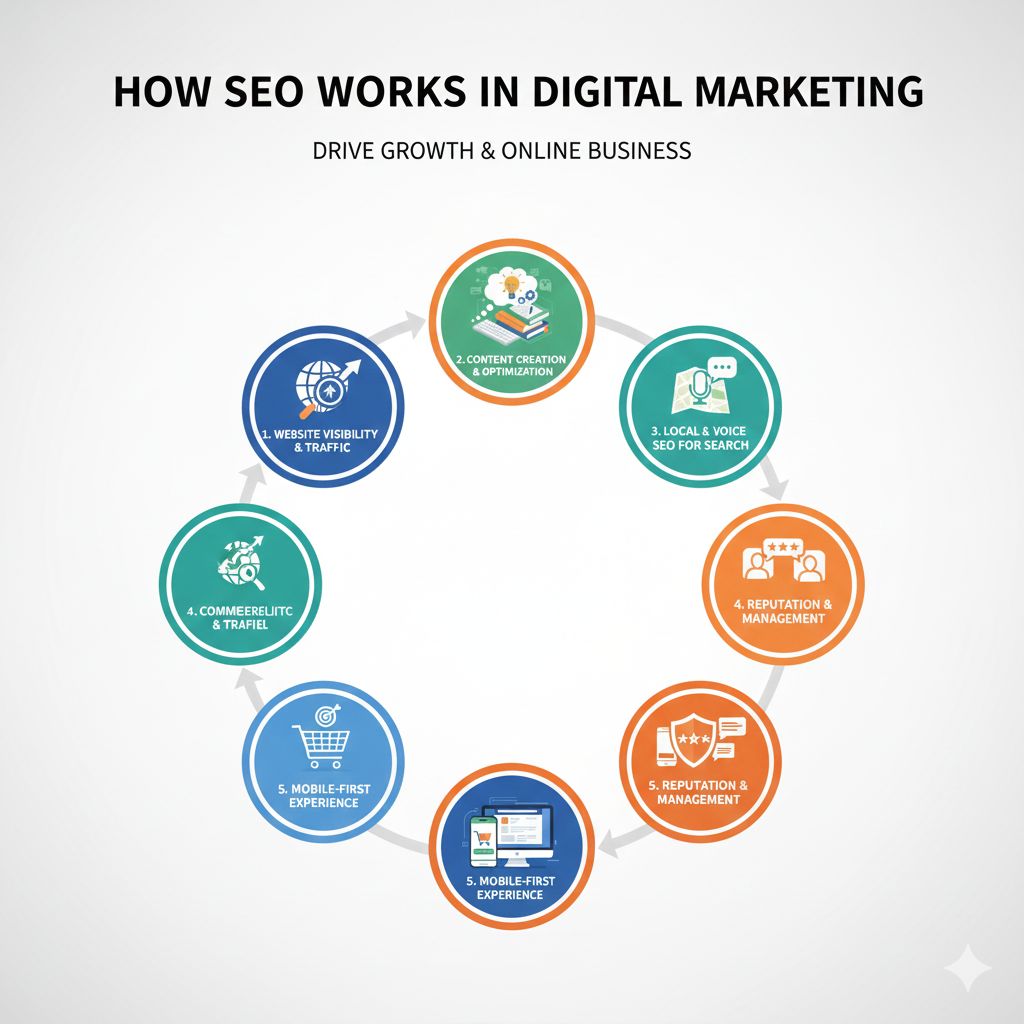
How Search Engines Discover and Rank Websites
Search engines use complex systems to decide which pages deserve top rankings. This process happens in three main stages:
1. Crawling 
Search engine bots explore the web to find new or updated pages.
2. Indexing 
The discovered pages are stored in a massive database known as the index.
3. Ranking 
Search engines analyze ranking signals to determine which pages best answer a user’s query.
SEO ensures that your website is crawlable, indexable, and optimized to rank competitively.
Understanding Search Intent
Modern SEO goes beyond keywords. It focuses on search intent, which means understanding what users actually want.
Types of Search Intent
Informational (learning something)
 Navigational (finding a specific site)
 Transactional (ready to buy)
Commercial (comparing options)
Optimizing content based on intent improves relevance and conversion rates.
Core Types of SEO You Must Know 
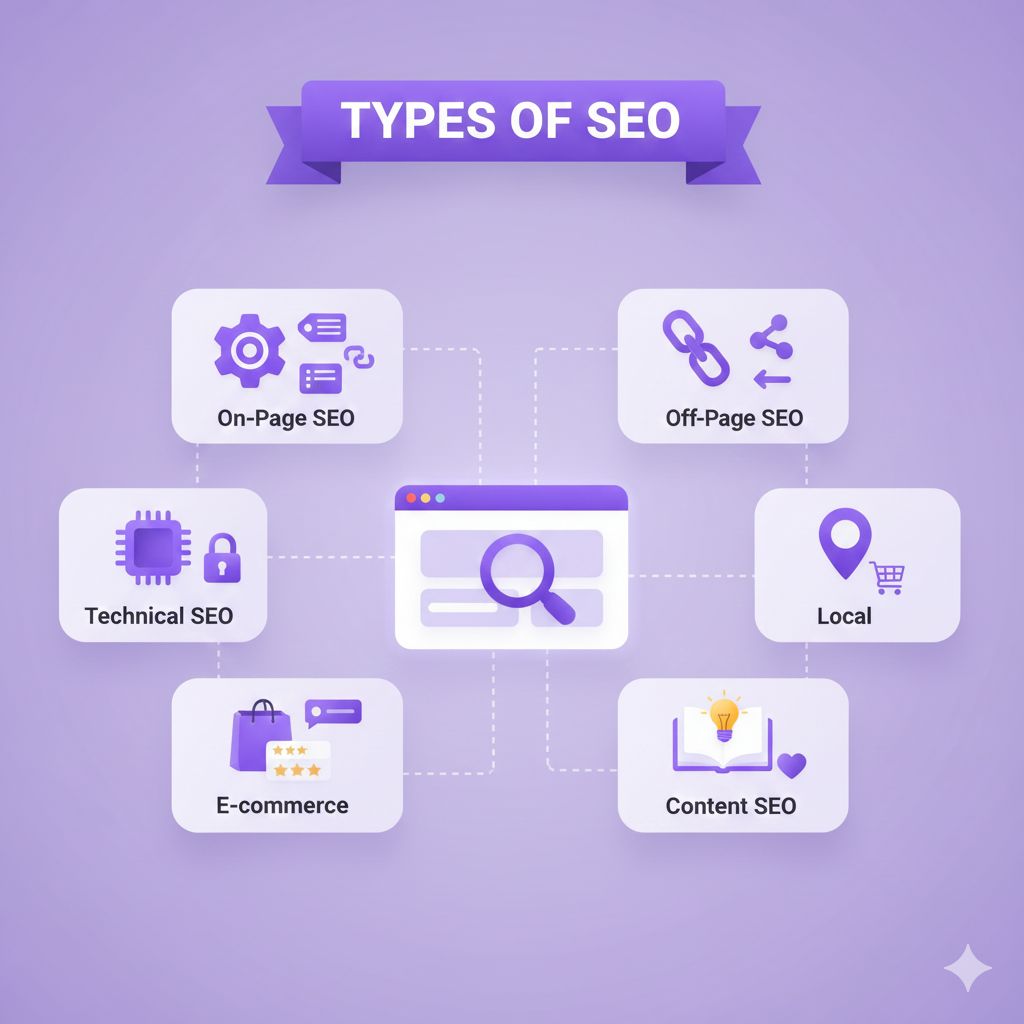
SEO is made up of several interconnected parts that work together.
1. On-Page SEO: Optimizing Your Website Content 
On-page SEO includes all the optimization done directly on your website.
Key On-Page SEO Factors
 Strategic keyword placement
 Optimized titles and meta descriptions
 High-quality, original content
 Internal linking structure
 Image optimization with alt text
 Mobile-friendly layout
Strong content alone is not enough if technical SEO is missing.
2. Off-Page SEO: Building Authority Outside Your Website
Off-page SEO focuses on increasing your website’s credibility through external signals.
Important Off-Page SEO Elements
High-quality backlinks
 Guest posting on relevant websites
 Brand mentions across the web
Social sharing and engagement
The more trusted websites link to you, the more authority your website gains.
3. Technical SEO: Strengthening the Website Backbone 
Technical SEO ensures your website performs smoothly behind the scenes.
Technical SEO Essentials
 Fast website loading speed
 Secure HTTPS connection
 XML sitemaps
 Fixing crawl errors
Mobile responsiveness
Great content needs a solid technical SEO foundation to reach top rankings.
Keyword Research: The Heart of SEO
Keyword research is the process of discovering what users are searching for online. The right keywords guide your content to the people who need it most.
Types of Keywords
Short keywords (high competition)
 Long-tail keywords (high intent)
 Location-based keywords
 Buyer-focused keywords
Using the right mix of keywords improves visibility and conversion potential.
Content and SEO: A Powerful Partnership 
Content is the foundation of SEO. Search engines prioritize websites that offer helpful, relevant, and original information.
SEO Content Best Practices
Focus on solving user problems
Provide in-depth explanations
 Avoid duplicate content
Use headings for structure
Add visual elements
 Update content regularly
Quality content keeps users engaged and improves rankings naturally.
User Experience (UX) and SEO 
Search engines now measure how users interact with websites. A positive experience signals quality.
UX Factors That Influence SEO
 Page loading speed
Mobile usability
Easy navigation
Readable content layout
 Low bounce rate
Good UX not only improves rankings but also builds customer trust.
Local SEO: Reaching Nearby Audiences
Local SEO helps businesses appear in searches related to a specific location.
Benefits of Local SEO
 Attracts local customers
 Increases phone calls and visits
 Improves local brand awareness
Optimizing business listings and collecting reviews are key to local SEO success.
Mobile SEO: Optimizing for Modern Users
With most searches happening on mobile devices, mobile SEO is critical.
Mobile SEO Best Practices
Responsive design
Fast loading on mobile
 Clear fonts and buttons
Simple navigation
Search engines prioritize mobile-friendly websites, making this essential.
SEO Analytics: Measuring What Matters
Tracking SEO performance helps you improve strategies over time.
Important SEO Metrics
Organic traffic growth
Keyword rankings
Bounce rate
 Time on site
Conversion rate
Data-driven SEO leads to consistent improvement.
Common SEO Mistakes to Avoid 
Many websites lose rankings due to avoidable errors.
SEO Mistakes to Watch Out For
Keyword overuse
Thin or copied content
Low-quality backlinks
 Ignoring technical issues
Poor mobile optimization